 Merken
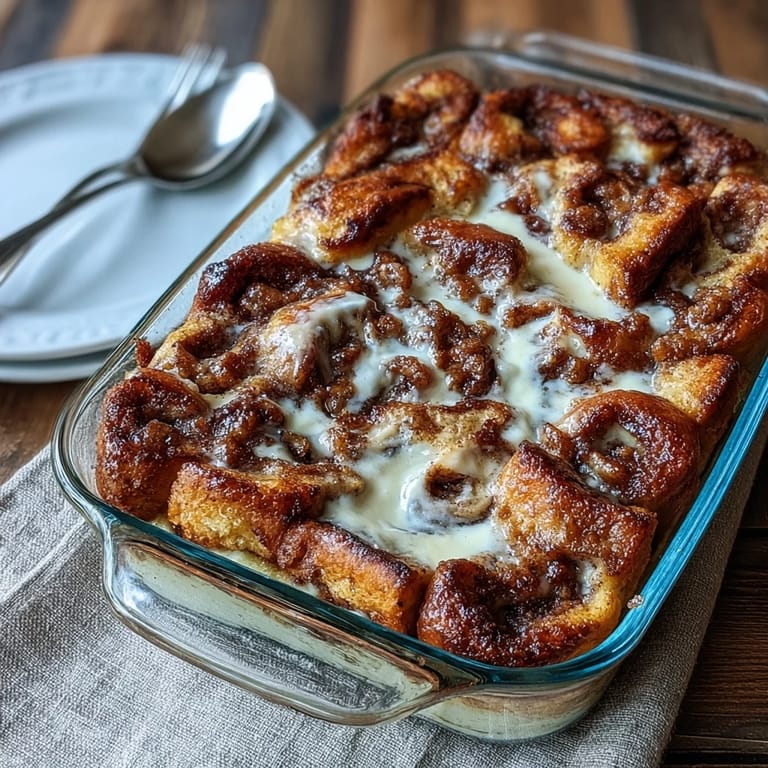
 Saturday mornings at my aunt's house always smelled like cinnamon and butter, but it wasn't until she casually mixed cream cheese into a French toast bake that I understood breakfast could feel like dessert. That first bite—the creamy swirls cutting through the eggy bread, hints of banana underneath—changed how I thought about feeding people I loved. Now whenever I make this, I'm back in that kitchen watching her swirl the mixture like she was painting something beautiful.
I made this for a friend's birthday brunch last spring, and watching eight people sit in silence for that first minute—just eating, just enjoying—told me everything I needed to know. Someone asked for the recipe before they'd even finished their plate, and I realized that food like this doesn't just fill stomachs, it creates moments people remember.
Ingredients
- Brioche or challah bread (1 large loaf, about 450 g, cut into 1-inch cubes): The richness matters here—this isn't a job for plain white bread, and cubing it yourself means no weird bread dust at the bottom.
- Ripe bananas (2 large, mashed): They need to be speckled and soft, almost too ripe for eating straight, because that's when they're sweetest and dissolve into the custard.
- Eggs (6 large): The backbone of your custard, so don't skip or substitute; they're what makes this bake set properly.
- Whole milk (2 cups/480 ml): Full fat makes the difference—it creates a richer, creamier texture than 2% or skim.
- Heavy cream (1/2 cup/120 ml): This is what separates this from ordinary French toast; it adds a luxurious mouthfeel.
- Brown sugar (1/2 cup/100 g): Use packed brown sugar so you get all those molasses notes that make this taste like cinnamon rolls.
- Ground cinnamon (2 tsp): Measure it fresh from a container you've opened recently; old cinnamon tastes like dust.
- Ground nutmeg (1/4 tsp): Just a whisper—too much and it tastes like medicine, but just right and it adds warmth you can't quite name.
- Pure vanilla extract (1 tbsp): Splurge on real vanilla; the imitation version will haunt you.
- Salt (1/4 tsp): This isn't optional—it balances the sweetness and makes every flavor sing.
- Cream cheese (225 g/8 oz, softened): Leave it on the counter for at least an hour before beating; cold cream cheese won't blend smoothly.
- Granulated sugar (1/4 cup/50 g): This sweetens the cream cheese layer without weighing it down.
- Large egg yolk (1): The yolk binds the cream cheese mixture and adds richness; don't skip it or substitute with a whole egg.
- Unsalted butter (2 tbsp, melted): For the topping, and salted would overshadow the cinnamon.
Tired of Takeout? 🥡
Get 10 meals you can make faster than delivery arrives. Seriously.
One email. No spam. Unsubscribe anytime.
Instructions
- Prepare your vessel:
- Grease a 9x13-inch baking dish generously with butter or nonstick spray, getting into the corners so nothing sticks. This matters more than you'd think.
- Build the custard base:
- In a large mixing bowl, whisk together eggs, milk, heavy cream, brown sugar, cinnamon, nutmeg, vanilla, and salt until everything is smooth and the sugar has mostly dissolved. Stir in your mashed bananas, letting them blend into the mixture so the color shifts to a warm tan.
- Soak the bread:
- Add bread cubes to the custard and toss gently but thoroughly—you want every piece coated, not drowning. Let it sit for 10 minutes so the bread drinks in the flavors instead of staying separate.
- Create the cream cheese swirl:
- While the bread soaks, beat softened cream cheese with sugar, egg yolk, and vanilla in a medium bowl until completely smooth and creamy, about 2 minutes. If you see any lumps, keep going until they disappear.
- Layer with intention:
- Pour half the soaked bread mixture into your prepared dish, spreading it in an even layer. Drop half the cream cheese mixture in dollops across the top, then repeat with remaining bread and cream cheese. Using a knife, swirl through the mixture in a gentle figure-eight pattern, creating those marbled veins without overworking it.
- Add the finishing touch:
- Mix melted butter, brown sugar, and cinnamon in a small bowl, then drizzle or sprinkle it evenly over the casserole. It should look like you're topping a cinnamon roll.
- Patience through the night:
- Cover tightly with plastic wrap or foil and refrigerate overnight, or at minimum 4 hours. This resting time is when the magic happens—flavors deepen and the custard fully absorbs into the bread.
- The final bake:
- Preheat your oven to 350°F (175°C) and let the casserole come out of the fridge while it heats. Bake uncovered for 40–45 minutes until the top is golden brown and the center jiggles only slightly when you shake the dish.
- Rest and serve:
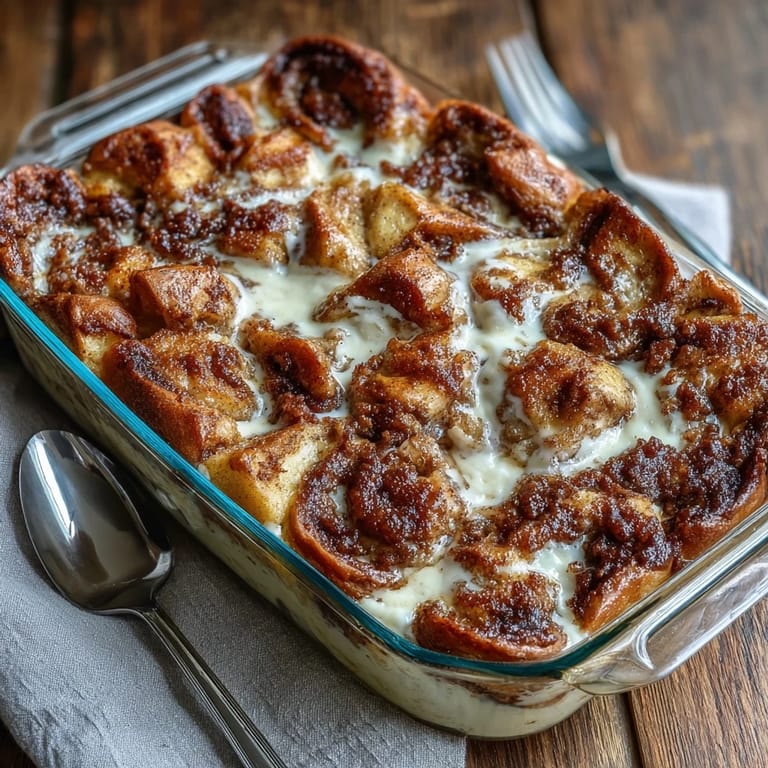
- Let it cool for 10 minutes—this helps it set so it doesn't fall apart on the plate. Serve warm with maple syrup or a dusting of powdered sugar if you're feeling fancy.
 Merken
 My neighbor brought over her three kids one morning while this was baking, and the smell pulled them into the kitchen like a spell. They stood there watching steam rise from the oven, noses pressed against the glass, and I realized that breakfast food holds a kind of power—it brings people together before the day even starts.
The Science of Overnight Soaking
There's something almost magic about how bread absorbs liquid overnight. The moisture doesn't just sit on the surface—it slowly seeps inward, transforming the texture from crispy-edged to creamy throughout. The custard also continues to thicken as the starch from the bread releases into it, creating a binding effect that holds everything together.
Customizing Your Swirl
I've experimented with variations, and the formula stays flexible. You could use cinnamon swirl bread instead of plain brioche for extra intensity, or layer thin slices of fresh banana between the bread and cream cheese. One time I added a tablespoon of maple extract to the cream cheese mixture, and it felt like autumn in every bite.
What to Serve Alongside
This dish is rich and doesn't need much, but the right beverage or side makes it feel intentional. Strong coffee cuts through the sweetness beautifully, while chai adds warmth that echoes the spices. Some mornings I've added a simple fruit salad on the side, or just trusted that this stood on its own.
- Maple syrup and powdered sugar are the classics, but they're classics for a reason.
- Leftovers reheat perfectly in a 300°F oven for about 8 minutes, staying moist and warm.
- This keeps in the fridge for up to 3 days, making it perfect for busy weeks when you want breakfast to feel special without the work.
 Merken
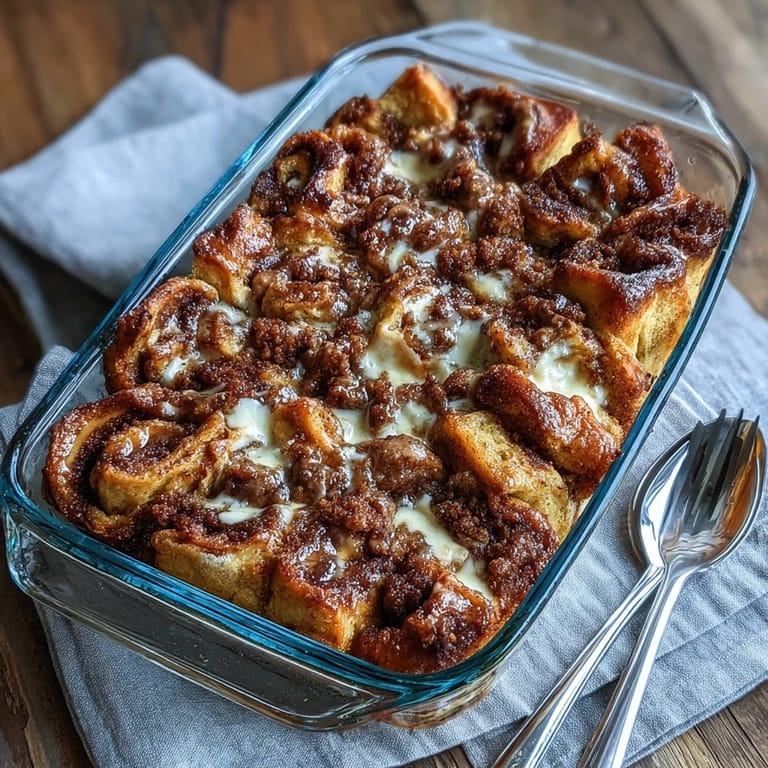
 This recipe has become my answer when someone asks what to bring to a gathering or what to make when you want to show love through breakfast. It's the kind of dish that tastes like affection.
Rezept-Fragen und Antworten
- → Kann ich diesen Auflauf vorbereiten?
Ja, dieser Auflauf eignet sich hervorragend zur Vorbereitung. Assemblieren Sie ihn am Abend zuvor, decken Sie ihn fest ab und lagern Sie ihn über Nacht im Kühlschrank. Die Textur wird sogar besser, da das Brot mehr Custard aufnimmt.
- → Welches Brot funktioniert am besten?
Brioche oder Challah sind ideal wegen ihres hohen Fettgehalts und lockeren Krümels. Avoiden Sie sehr dichtes Brot wie Sauerteig, da es zu flüssig werden kann. Etwas angestochenes Brot (2-3 Tage alt) absorbiert die Custard perfekt ohne zu zerfallen.
- → Wie erkenne ich, dass der Auflauf fertig gebacken ist?
Der Auflauf ist gar, wenn er goldbraun ist, die Ränder fest erscheinen und die Mitte beim Schütteln nicht mehr flüssig wackelt. Ein in die Mitte gestecktes Messer sollte sauber herauskommen. Die Restwärme sorgt für weitere Festigkeit während der 10-minütigen Ruhezeit.
- → Kann ich die Bananen weglassen oder ersetzen?
Die Bananen können weggelassen werden - ersetzen Sie sie durch zusätzliches Brot (ca. 2-3 Scheiben mehr) für die gleiche Konsistenz. Alternativ funktionieren pürierte Äpfel oder Kürbis für eine andere Geschmacksrichtung.
- → Wie lange sind Reste haltbar?
Im Kühlschrank aufbewahrt hält sich der Auflauf bis zu 3 Tage. Erwärmen Sie Portionen in der Mikrowelle (30-60 Sekunden) oder im Ofen (10 Minuten bei 175°C) für frischen Geschmack. Die Frischkäse-Veredelungen machen ihn noch cremiger nach dem Erwärmen.
- → Kann ich dieses Gericht einfrieren?
Ja, ungebacken oder gebacken kann der Auflauf eingefroren werden. Ungebacken bis zu einem Monat, gebacken bis zu drei Monate. Tauen Sie über Nacht im Kühlschrank auf und backen Sie wie angegeben, oder erwärmen Sie gebackene Portionsstücke direkt aus gefrorenem Zustand.