 Merken
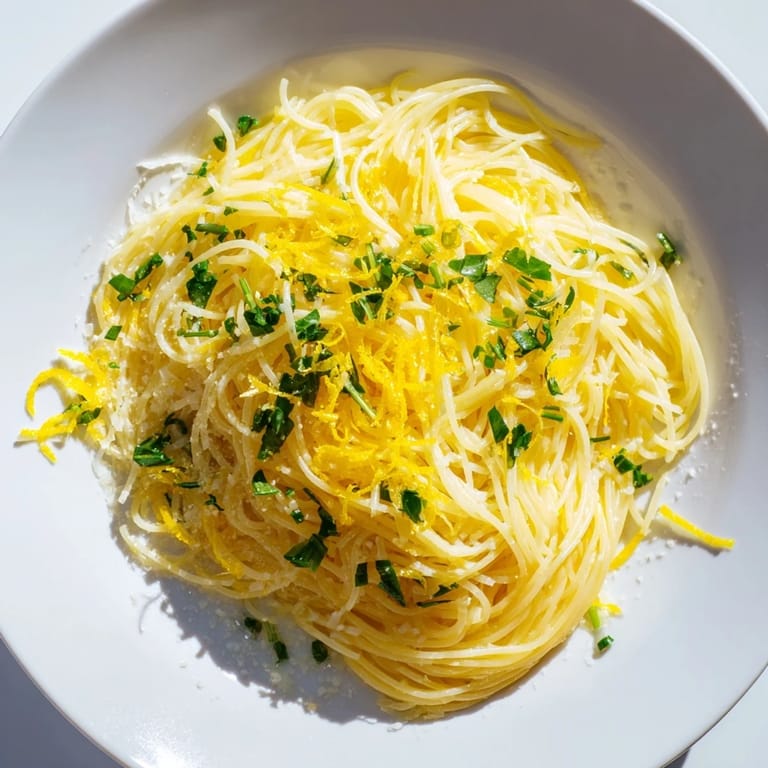
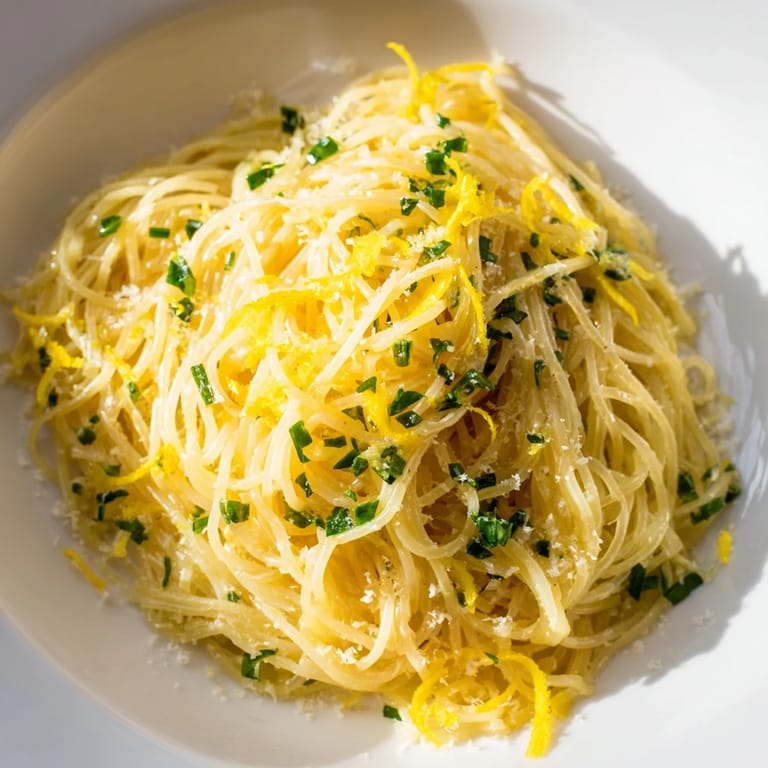
 There's something almost meditative about the way a single lemon can transform the simplest pasta into something that feels like you've unlocked a kitchen secret. I discovered this dish on a Sunday afternoon when I had nothing but capellini, a couple of lemons, and butter in my kitchen, and somehow those three things created something so bright and silky that I've made it at least once a week since. The beauty of it is how the sauce clings to those delicate strands without needing cream or any fussy technique.
I made this for my sister during a busy week when she stopped by unexpectedly, and watching her face as she took that first bite—how she closed her eyes at the brightness of it—reminded me why I keep coming back to simple dishes. Sometimes the most memorable meals aren't complicated; they're just made with attention and the best ingredients you have on hand.
Ingredients
- Capellini: Angel hair pasta is delicate enough that it won't fight against the silky sauce; thicker pasta would drown out the subtle lemon flavour.
- Unsalted Butter: This is where the creaminess lives, so use good butter that tastes like butter.
- Fresh Lemon Zest and Juice: Two lemons gives you brightness without bitterness; zest first, then juice, so you capture both the aromatic oils and the acidity.
- Reserved Pasta Water: This starchy liquid is the secret to a silky sauce that actually clings to the pasta instead of sliding off.
- Parmesan Cheese: Freshly grated only—the pre-grated stuff won't melt as smoothly into that delicate sauce.
- Fresh Herbs: Parsley, basil, and chives added at the end preserve their brightness; cook them and they disappear.
Tired of Takeout? 🥡
Get 10 meals you can make faster than delivery arrives. Seriously.
One email. No spam. Unsubscribe anytime.
Instructions
- Boil the pasta with intention:
- Salt your water generously so the pasta tastes good from the start, and watch those thin strands carefully—they go from perfectly al dente to overcooked in seconds. The moment you see them turn golden and feel just slightly firm when you bite, they're done.
- Bloom the lemon zest in butter:
- Those 30 seconds matter; you'll smell the shift as the heat releases the oils from the zest and the butter begins to carry that aroma. This is where the dish gets its soul.
- Build the sauce with patience:
- Add the juice and pasta water slowly, letting them warm and meld with the butter and zest. You're not making a sauce in the traditional sense; you're creating an emulsion where every element holds hands.
- Toss the pasta gently but thoroughly:
- This is the moment where technique matters—use pasta tongs or a fork to lift and turn the strands so they're evenly coated without breaking. The motion should be confident and calm.
- Chase the cheese melt:
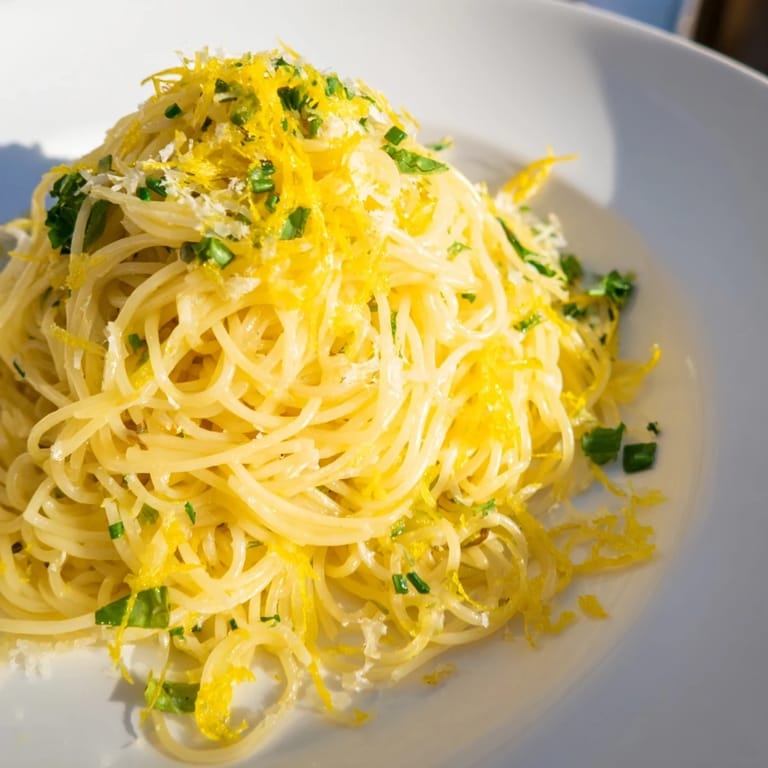
- Add the Parmesan and toss immediately so it distributes evenly and melts into the warmth of the sauce, creating that glossy finish. If it looks too thick, add just a splash more pasta water.
- Finish with fresh herbs off heat:
- Remove from the heat before adding the herbs so they stay bright and vibrant instead of turning dark and muted. The residual warmth will be enough to release their flavour.
 Merken
 My daughter, who usually pushes pasta aside without interest, asked for seconds the first time I made this, and that's when I realized that sometimes simplicity speaks louder than complexity. This dish taught me that you don't need a long ingredient list to create something that feels special.
The Magic of Lemon in Pasta
Lemon does something almost alchemical in a warm pan with butter—it cuts through richness while adding its own brightness, creating balance without any heaviness. The key is using both zest and juice; the zest carries fragrant oils while the juice provides acidity that wakes up your palate. This is why a squeeze of lemon at the table never compares to lemon built into the sauce from the beginning.
Timing and Temperature Matter
The speed of this dish is part of its charm, but rushing through the steps means missing the small moments where flavours develop. The pasta should still have warmth when it hits the sauce so the Parmesan melts smoothly, but you don't want it so hot that the herbs wilt and turn grey. It's a narrow window, but once you've made it a few times, your instincts take over.
Variations and Additions
While this dish is perfect on its own, I've learned that different moods call for different additions. A handful of sautéed shrimp makes it feel like a dinner party; a few torn pieces of grilled chicken turns it into something more substantial. Even just a drizzle of good olive oil at the end adds an earthy note that makes people wonder what you did differently.
- Mascarpone stirred in at the end adds richness without changing the essential brightness of the dish.
- A pinch of red pepper flakes adds heat that complements the bright citrus beautifully.
- Toasted breadcrumbs scattered on top provide texture and a nutty contrast to the silky sauce.
 Merken
 This pasta reminds me that the best dishes are often the ones that let good ingredients speak for themselves. Make it tonight and taste the difference that attention makes.
Rezept-Fragen und Antworten
- → Wie lange sollte man Capellini kochen?
Capellini benötigt nur 2–3 Minuten in kochendem Salzwasser bis al dente; es wird schnell gar und bleibt zart.
- → Welche Kräuter passen am besten zu Zitronen-Butter-Sauce?
Frische Petersilie, Basilikum und Schnittlauch ergänzen die Zitronen-Butter-Sauce durch ihre aromatische Frische ideal.
- → Kann ich das Gericht praktisch anpassen?
Ja, für eine cremigere Textur eignen sich Mascarpone oder Crème fraîche. Zusätzlich kann man gebratene Garnelen oder Hühnchen hinzufügen.
- → Wie erzeugt man eine seidig-glatte Sauce?
Das Zurückhalten von etwas Nudelwasser und das behutsame Unterheben von Parmesan helfen, die Sauce cremig und geschmeidig zu machen.
- → Gibt es eine glutenfreie Variante?
Glutenfreie Capellini sind eine gute Alternative, um den Genuss ohne Weizen zu gewährleisten.