 Merken
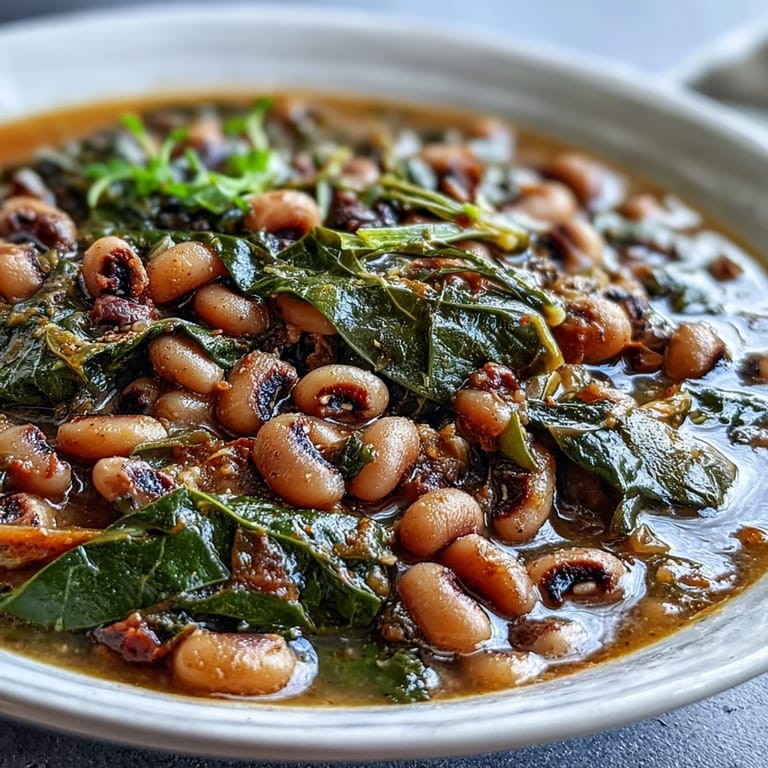
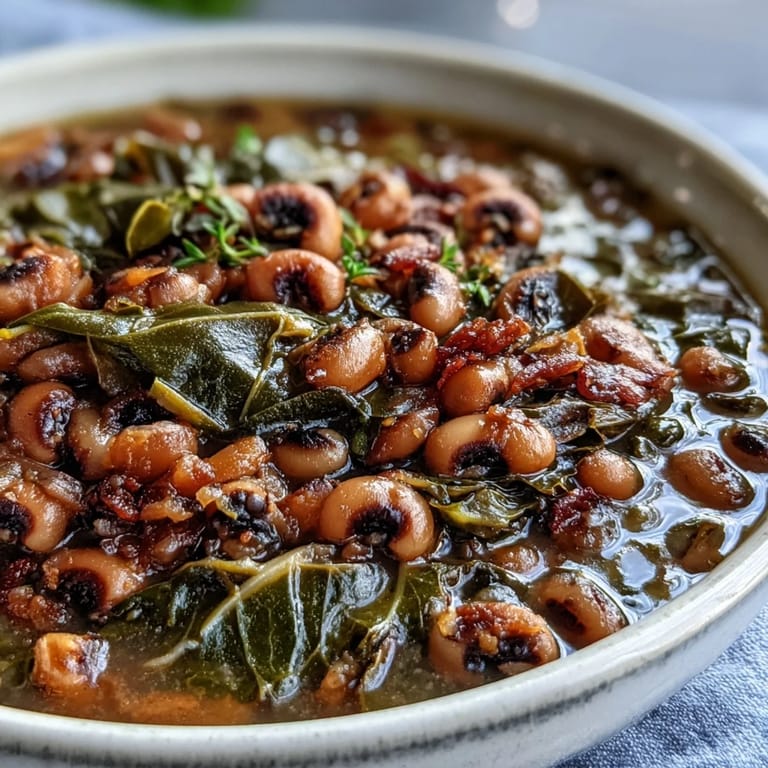
 My grandmother used to say that black-eyed peas on New Years Day weren't just food—they were insurance against a lean year ahead. I never quite believed in the superstition until I made this dish for the first time on a cold January morning, the kitchen filling with the smell of smoked paprika and simmering broth, and suddenly the whole tradition made sense. There's something about combining tender peas with silky collard greens that feels like comfort distilled into a bowl. The first spoonful tasted like generations of Southern kitchens, and I understood why people return to this meal year after year.
I served this to a neighbor who had just moved in across the street, unsure if a big pot of Southern greens and peas would translate beyond the Mason-Dixon line. She came back three days later asking for the recipe, admitting sheâd eaten the leftovers for lunch and breakfast both days. That moment taught me that some dishes speak a universal language, one that has nothing to do with geography and everything to do with warmth.
Ingredients
- Dried black-eyed peas (2 cups) or canned (3 cans, drained): Dried peas need overnight soaking but reward you with a creamier texture; canned are your shortcut when time is tight, and honestly, no one notices the difference.
- Collard greens (1 large bunch, about 1 lb): Remove those tough stems first—theyre fibrous and bitter, and your teeth will thank you for the attention to detail.
- Onion (1 large, finely chopped): This is your flavor foundation; donât rush the chopping or the sautéing.
- Garlic (3 cloves, minced): Mince it fine so it dissolves into the broth rather than stubbornly sitting as chunks.
- Celery and carrot (2 stalks and 1 medium): The holy trinity starts here; these aromatics create the depth that makes people ask what your secret ingredient is.
- Bay leaf (1): This little leaf does more work than you'd expect; always remember to fish it out before serving.
- Smoked paprika (1 teaspoon): This is where the smokiness lives—regular paprika wonât give you that depth, so donât skip the upgrade.
- Dried thyme (1 teaspoon): Fresh thyme is lovely, but dried holds its own in long-simmered dishes like this.
- Red pepper flakes (1/2 teaspoon, optional): Use this if you want a gentle heat that builds slowly; leave it out if your crowd prefers gentler flavors.
- Vegetable or chicken broth (6 cups): Quality broth makes a noticeable difference here, so taste before you buy.
- Apple cider vinegar (1 tablespoon): This is the finishing touch that brightens everything; donât skip it, even if you donât think you like vinegar.
- Smoked ham hock or diced smoked turkey (4 oz, optional): If using meat, it adds a whisper of smokiness that lingers in every spoonful; omit entirely for vegetarian versions without replacing with anything else.
- Cornbread (1 pan, cut into wedges): This isnât optional in my book; cornbread absorbs the broth and becomes transcendent by the last bite.
- Hot sauce (for serving): Let people doctor their own bowls; some want fire, others prefer the subtle heat already present.
Tired of Takeout? 🥡
Get 10 meals you can make faster than delivery arrives. Seriously.
One email. No spam. Unsubscribe anytime.
Instructions
- Prepare your peas the night before (if using dried):
- Rinse the dried peas under cold water, then cover them completely with fresh cold water and let them sit overnight on the counter or in the refrigerator. This soaking softens them and reduces cooking time significantly.
- Build your flavor base:
- Heat a splash of oil in your largest pot over medium heat, then add the chopped onion, celery, and carrot. Let them soften and turn golden, about 5 minutes, stirring occasionally so nothing sticks to the bottom. Youâll know itâs ready when the kitchen smells sweet and savory at once.
- Wake up the garlic:
- Add your minced garlic and stir constantly for just 1 minute—any longer and it turns bitter and harsh. You want it fragrant, not brown.
- Add the meat if youre using it:
- If youâve chosen ham hock or smoked turkey, nestle it into the vegetables and let it toast for 2 minutes, rendering some of its fat into the pot. This step is optional but worth it for depth.
- Coat the peas in spices:
- Drain your soaked peas and add them to the pot along with the bay leaf, smoked paprika, thyme, and red pepper flakes if using. Stir everything together for a minute so the peas and vegetables get a light coating of spice. The aroma that rises up is intoxicating.
- Simmer the peas until tender:
- Pour in your broth and bring everything to a boil, then reduce the heat to low, cover with a lid, and let it bubble gently. Dried peas need about 45 minutes; canned peas need only 20 minutes to warm through and begin absorbing flavor.
- Add the greens and finish simmering:
- Once the peas are getting soft, remove the lid and stir in your chopped collard greens—they seem to take up half the pot at first, but they wilt dramatically within minutes. Simmer uncovered for another 30 minutes, stirring occasionally, until the peas are completely creamy and the greens have turned from bright to deeply saturated in color.
- Finish with vinegar and seasoning:
- Stir in the apple cider vinegar, then fish out the bay leaf and the ham hock if used. If there is meat on the bone, shred it and return it to the pot. Taste everything and season with salt and pepper, remembering that the broth may already have salt, so go slowly.
- Serve with ceremony:
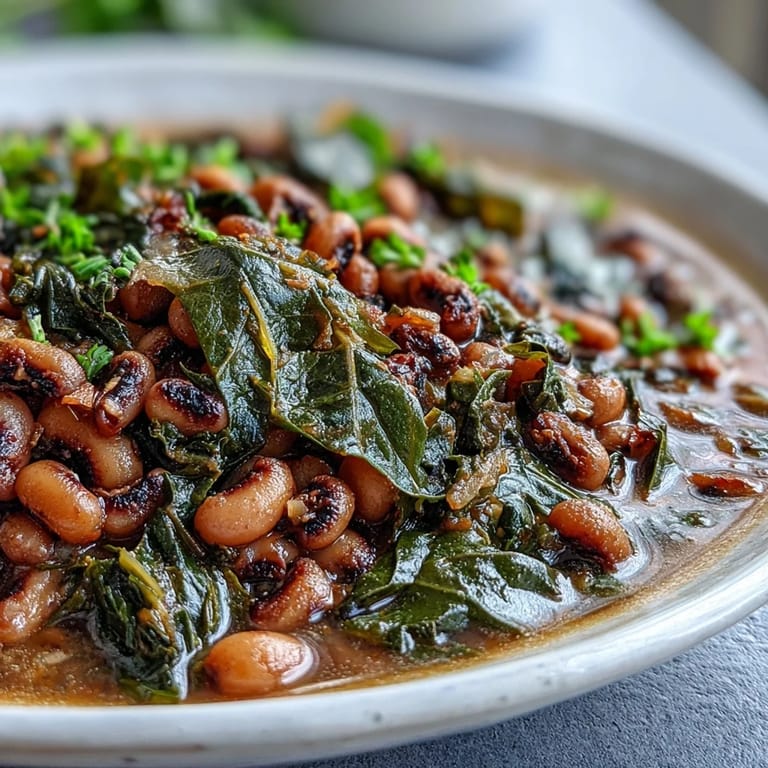
- Ladle into bowls, top with a wedge of warm cornbread, and let people add hot sauce to taste. There is something about this moment—the steam rising, the golden cornbread ready to soak up every drop—that feels like a small celebration.
 Merken
 A friend once told me that her family believed eating black-eyed peas on New Years Day guaranteed good luck only if someone else made them for you—that the luck came from receiving generosity rather than manufacturing it yourself. I think about that when I make this dish, how the act of simmering something slowly for hours and then setting it in front of people feels like a small way of saying: I made something good, and I want you to have it.
The Story Behind the Symbolism
Black-eyed peas show up on Southern tables on New Years Day because of old traditions rooted in resilience and hope. The pea itself, with its little black-eyed center, supposedly looks like a coin, making the dish a symbol of prosperity and good fortune. Whether you believe in the luck or not, thereâs something powerful about gathering around food that carries meaning, especially at the start of a new year when everyone is thinking about fresh beginnings.
Timing and Make-Ahead Magic
One of the best-kept secrets about this dish is that it actually improves after a day or two in the refrigerator. The flavors meld and deepen, the broth becomes more flavorful, and the whole thing feels even more substantial. I often make this on December 30th so it has time to rest before serving on New Years Day, which also means I can spend the actual holiday relaxing instead of hovering over a pot.
Substitutions and Seasonal Variations
The beauty of this dish is how forgiving it is—substitute kale or mustard greens if collards arenât available, or use a different variety of beans if black-eyed peas arenât calling to you. Some people add diced tomatoes for brightness, others stir in a splash of hot sauce while cooking rather than serving it on the side. The core concept stays the same: slow-cooked vegetables and legumes that become greater than the sum of their parts.
- If you canât find fresh collard greens, frozen ones work beautifully and save you the labor of removing all those tough stems.
- Vegetable broth is the obvious swap for vegetarians, but chicken broth brings richness if youâre not restricting meat.
- A splash of bourbon at the very end, just before serving, adds a layer of complexity that no one will quite be able to name.
 Merken
 This dish has taught me that food doesnât need to be complicated to be meaningful. Simple ingredients treated with attention and time become something people remember and request year after year. Thatâs the real luck.
Rezept-Fragen und Antworten
- → Wie lange sollte man schwarze Augenbohnen einweichen?
Getrocknete schwarze Augenbohnen sollten idealerweise über Nacht in kaltem Wasser eingeweicht werden, um die Garzeit zu verkürzen und die Bekömmlichkeit zu verbessern.
- → Kann man Collard Greens ersetzen?
Falls Collard Greens nicht verfügbar sind, eignen sich alternativ Grünkohl oder Senfkohl als Ersatz, da sie ähnlich zart und geschmackvoll sind.
- → Wie wird das Gericht vegetarisch zubereitet?
Für eine vegetarische Variante einfach geräuchertes Fleisch weglassen und stattdessen Gemüsebrühe verwenden.
- → Welche Gewürze passen besonders gut zu schwarzen Augenbohnen?
Räucherpaprika, Thymian und Lorbeerblatt verleihen den Bohnen eine warme und aromatische Note.
- → Wie behält man die zarte Konsistenz der Collard Greens?
Die Blätter erst gegen Ende der Kochzeit hinzufügen und sanft köcheln lassen, damit sie zart bleiben und nicht zerfallen.
- → Womit wird das Gericht traditionell serviert?
Traditionell wird das Gericht mit Maisbrot serviert, das die herzhafte Kombination wunderbar ergänzt.