 Merken
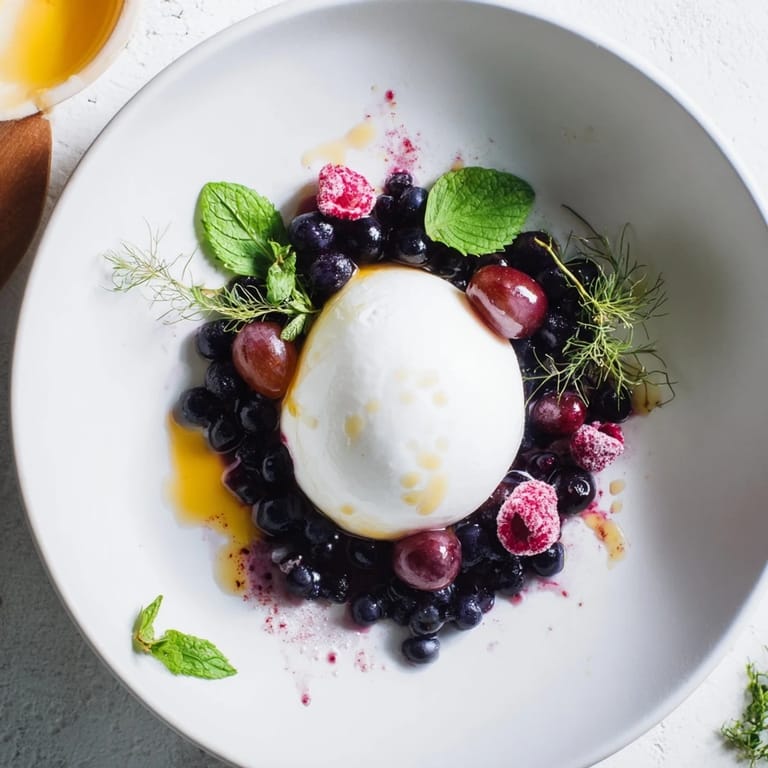
 I discovered this salad by accident on a summer evening when my market trip left me with an armful of purple grapes, a carton of fresh blueberries, and an impulse decision to grab burrata from the cheese counter. Standing in my kitchen with these jewel-toned fruits and creamy white cheese, something clicked—the colours alone felt like poetry. That night, as twilight settled and I arranged everything on a platter, a friend texted asking what I was making. "Something I'm inventing," I replied, and somehow it became our ritual.
The first time I made this for others was during a dinner party where someone showed up saying they'd been craving something light. As I set this platter down, the room went quiet for a moment—not awkwardly, but with that quality of attention that happens when food looks genuinely beautiful. Someone asked for the recipe before even tasting it, and I realized the visual moment mattered as much as the flavour.
Ingredients
- Fresh Blueberries (1 cup): These hold their shape and tartness beautifully, creating pockets of brightness between the grapes—don't rinse them until the last possible moment or they weep.
- Seedless Purple Grapes, halved (1 cup): Halving releases their juice slightly, creating little flavour pools that mingle with the oil and glaze.
- Burrata Cheese, 1 large ball (about 200 g): This is the soul of the dish—room temperature, never cold from the fridge, so the creamy centre flows like moonlight.
- Fresh Basil Leaves, torn (1/3 cup): Tearing by hand rather than cutting keeps the leaves tender and prevents them from blackening where a knife would bruise them.
- Baby Arugula or Mixed Greens (1 cup, optional): A gentle base that catches the dressing and adds a whisper of peppery contrast.
- Extra-Virgin Olive Oil (2 tbsp): The quality matters here because it's tasted directly—choose one with character that you actually enjoy on its own.
- Balsamic Glaze (1 tbsp): The thick reduction version, not thin vinegar, so it clings and creates those dark threads across the fruit.
- Sea Salt and Freshly Ground Black Pepper: Finish generously; the salt brightens the fruit and cuts through the creaminess.
- Lemon Zest (optional): A whisper of brightness that catches the light and reminds your palate that this is summer on a plate.
Tired of Takeout? 🥡
Get 10 meals you can make faster than delivery arrives. Seriously.
One email. No spam. Unsubscribe anytime.
Instructions
- Prepare Your Canvas:
- Spread the arugula or greens across a wide, shallow platter—think of it as a soft bed for everything else. The wider the platter, the more dramatic the presentation becomes.
- Create the Fruit Ring:
- Scatter the blueberries and halved grapes in a generous circle around the edge, leaving the centre deliberately empty. This pause in the middle builds anticipation.
- Crown with Burrata:
- Nestle the burrata ball right in the centre, letting it sit proudly. Take a breath—you're almost there.
- Dress with Oil:
- Drizzle the olive oil in a thin, even stream over the entire composition, letting it pool slightly around the burrata. The oil carries flavour to every element.
- Add the Glaze:
- Spoon the balsamic glaze in thin, deliberate streams, watching it catch the light. Don't be timid—it's meant to be seen.
- Finish and Serve:
- Scatter torn basil leaves across the surface, add lemon zest if you're using it, then season with salt and pepper to taste. Serve immediately while everything is still cool and the burrata hasn't begun to soften too much.
 Merken
 What I didn't expect was how this simple arrangement became a conversation starter, the kind of dish that makes people pause mid-bite and notice what they're tasting. It's become the one I make when I want to feel like I'm hosting something special without any of the stress.
The Art of Arrangement
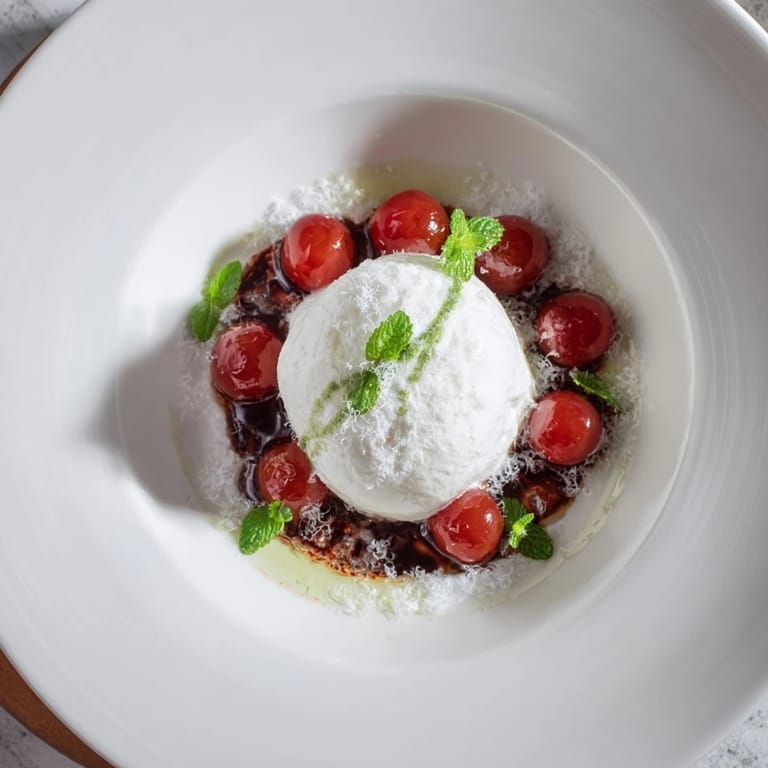
There's something meditative about arranging fruit in circles, about taking time to make the mundane feel intentional. I've noticed that when you slow down during plating, guests sense that care and it changes how they experience the meal. The moonlit lagoon isn't just a name—it's a visual anchor that makes everyone smile before they even taste it.
Variations That Keep It Interesting
Once you've made this once, you'll start seeing other possibilities: blackberries instead of blueberries for deeper colour, or mixing in a handful of raspberries for tartness. I've added toasted pistachios for crunch and swapped the burrata for fresh ricotta when that's what the market offered. Each change shifts the mood slightly while keeping the essential magic intact.
Perfect Pairings and Serving Suggestions
This salad breathes best alongside a crisp Sauvignon Blanc or a dry rosé—something cold and mineral that won't compete with the fruit. Serve it with crusty bread to catch every drop of the dressing, or let it stand alone as a palate cleanser between courses.
- Pour the wine before plating the salad so everything arrives at the table at once.
- If making this for a crowd, assemble individual portions rather than one large platter so each plate gets its own perfect balance.
- Save this recipe for warm evenings when you want to eat something that tastes like summer feels.
 Merken
 This salad taught me that sometimes the best dishes come from working with what you find rather than following rigid plans. It reminds me that beautiful food, made with intention, is its own kind of gift.
Rezept-Fragen und Antworten
- → Wie wähle ich die besten Blaubeeren aus?
Frische Blaubeeren sollten fest, prall und ohne Druckstellen sein. Achten Sie auf tiefblaue Farbe und vermeiden Sie schimmelige oder matschige Früchte.
- → Kann ich Trauben durch andere Früchte ersetzen?
Ja, etwa Brombeeren oder Himbeeren passen gut und bewahren die fruchtige Süße sowie die Textur des Gerichts.
- → Wie serviere ich diesen Salat am besten?
Am besten frisch serviert mit knusprigem Brot oder als leichter Snack zu einem Glas trockenen Rosé oder Sauvignon Blanc.
- → Welche Kräuter ergänzen den Salat ideal?
Frisches Basilikum ist perfekt für die aromatische Frische, Rucola kann für eine pfeffrige Note hinzugefügt werden.
- → Wie bewahre ich den Salat vor dem Servieren am besten auf?
Bereiten Sie den Salat kurz vor dem Servieren zu und lagern Sie die Zutaten getrennt im Kühlschrank, um Frische zu bewahren.